

The growing role of organisational readiness in local government reorganisation
Public Finance Live 2026: preparing for change across local government
ArticleJuly 20267 min

Annabelle Fox
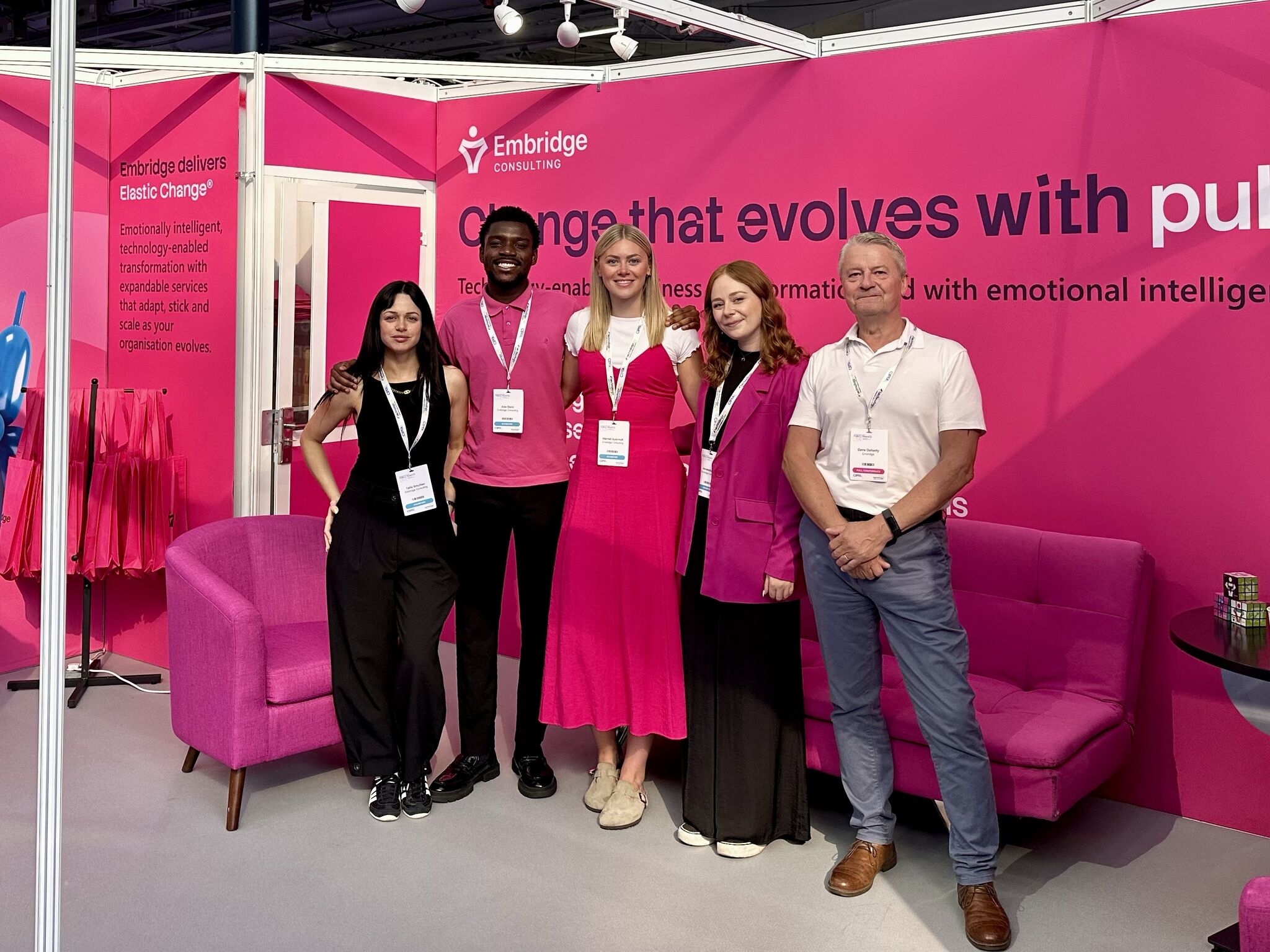
Public Finance Live (CIPFA) 2026 came at a defining moment for the public sector. With local government reform gathering pace, continued financial pressures and organisations managing increasingly complex transformation programmes, the conference provided an opportunity to hear directly from finance leaders, transformation specialists and policy experts about the challenges facing the sector.
Over two days we reconnected with customers, met new organisations and had countless conversations with delegates from across local government and the wider public sector. Combined with the keynote sessions and panel discussions, those conversations offered valuable insight into the priorities shaping the years ahead.
The sessions that shaped the conversation
The conference programme covered a broad range of topics, but several sessions stood out for the way they reflected the conversations happening across the exhibition hall.
CIPFA President Hardy Verdee opened the event, encouraging organisations to think beyond individual institutions and instead focus on delivering better outcomes through collaboration, improved data sharing and joined-up working. As local government increasingly looks towards shared services and new operating models, it was a timely reminder that transformation is about much more than organisational structures.
Another memorable keynote came from author and journalist Matthew Syed, whose session explored the difference between a fixed mindset and a growth mindset. Using examples including Microsoft's cultural transformation under Satya Nadella and the collaborative thinking behind the work at Bletchley Park, he demonstrated how organisations achieve better outcomes when they create cultures that encourage curiosity, learning and continuous improvement. It was a message that felt particularly relevant for organisations preparing to navigate significant change over the coming years.
The session most closely aligned with the work we do at Embridge, however, was the panel discussion on local government reorganisation, featuring Peter Borley-Cox, former CFO at Northamptonshire, Simon Allsop, CIPFA reform Specialist, and Joanne Pitt, CIPFA Policy Manager.
Drawing on lessons from previous reorganisations as well as the challenges facing authorities working towards vesting day in April 2028, the panel made a distinction that resonated with us throughout the rest of the event. Local government reorganisation is not fundamentally an ERP transformation programme. It is a business continuity, risk management and organisational readiness programme.
Whilst ERP remains a critical foundation, councils are under immense pressure to ensure they can continue paying staff correctly, maintain statutory compliance, deliver services without disruption and produce accurate financial information from day one. For many authorities, the priority is not delivering the perfect transformation programme immediately, but ensuring they are safe, legal and operational from the moment new organisations come into effect.
The panel also acknowledged the reality facing many councils. Few have the luxury of lengthy procurement exercises followed by multi-year transformation programmes. Instead, decision-making is increasingly being driven by implementation certainty, service continuity and reducing operational risk. The authorities that are likely to be most successful will be those that create alignment early, make key decisions as soon as possible and begin mobilisation before every aspect of reform has been finalised.
Local government reform is changing the conversation
The announcement during the conference that a further 14 areas will move forward with local government reorganisation, bringing together 134 councils into 38 new unitary authorities, reinforced just how significant this period of change will be for the sector. At the same time, many delegates told us they are still working through considerable uncertainty. While reform is progressing, detailed planning has been difficult because many authorities are still waiting for greater clarity around governance arrangements, structures and future operating models.
What was encouraging was that organisations are not simply standing still while they wait. Conversations increasingly focused on the practical work that can begin now, whether that's reviewing governance, strengthening operational resilience, considering technology, preparing data or ensuring critical services can continue throughout transition.
This felt like an important shift in thinking. Rather than seeing reform as something that starts once every decision has been made, many councils are recognising that readiness begins much earlier. The emphasis is moving towards reducing risk, protecting service continuity and building strong foundations that will support future transformation when greater certainty arrives.
Technology alone won't deliver successful transformation
Alongside local government reform, digital transformation remained high on the agenda throughout the conference.
One of the strongest messages we took away from Public Finance Live was that technology is only one part of the challenge. Councils are balancing reform, ERP programmes, cloud migration, shared services and wider organisational change at the same time. Approaching each programme independently is becoming increasingly difficult, particularly as resources remain stretched and expectations continue to grow.
The conversations we had suggested there is growing recognition that successful transformation depends on bringing together people, processes and technology, rather than treating them as separate initiatives.
Why Elastic Change resonated
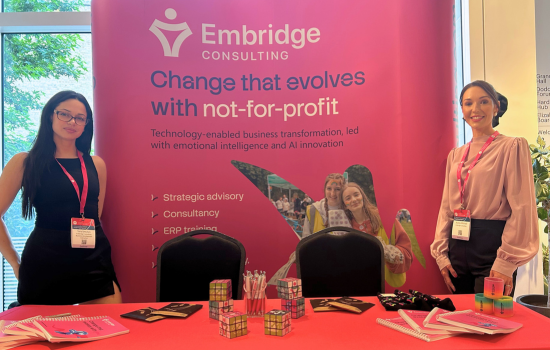
Our stand attracted plenty of attention throughout the event, thanks in no small part to our balloon artist, whose creations proved to be an excellent conversation starter.
What began with a balloon dog often led to discussions about the thinking behind our Elastic Change approach. As we explained how our approach combines expandable services, excellence in technology and emotionally intelligent (EQ) leadership, delegates were quick to recognise the challenges it was designed to solve. Many spoke about the constant nature of change in local government and the need for transformation that can adapt as priorities shift, while continuing to support the people delivering it.
This was particularly relevant given the scale of transformation many councils now face. Local government reform sits alongside financial pressures, digital transformation, workforce challenges and changing service expectations, creating an environment where leaders are managing several major programmes simultaneously.
Many of the people we spoke with recognised that emotionally intelligent leadership has never been more important. Supporting employees through uncertainty, maintaining engagement and helping teams adapt to change are becoming just as critical as selecting the right technology or delivering projects on time. It was encouraging to see how strongly this people-first approach resonated and reinforced our belief that successful transformation is created by balancing EQ leadership, excellence in technology and expandable services.
Preparing for what's next
Public Finance Live 2026 reinforced that local government is entering one of the most significant periods of change in recent decades. Reform, financial sustainability, digital transformation and workforce challenges are converging, requiring organisations to make important decisions while continuing to deliver essential public services.
What gave us confidence was the willingness across the sector to collaborate, share experiences and learn from one another. Whether through the keynote sessions, panel discussions or conversations on the exhibition floor, there was a shared understanding that no organisation can navigate this level of change in isolation.
For councils preparing for local government reorganisation, the challenge is not simply deciding what the future looks like but identifying what can be done today to strengthen readiness. The message that councils should focus on being safe, legal and operational before pursuing wider transformation is one that will undoubtedly stay with us.
To help authorities prepare, we've also developed our Unitary Readiness Framework, a series of practical guides designed specifically for councils progressing through local government reform. Covering each stage of the journey, the framework offers practical advice to help organisations reduce risk, strengthen readiness and build confidence for the changes ahead.
The conversations at Public Finance Live confirmed that while every council's journey will be different, preparing early, supporting people and maintaining a focus on operational resilience will give organisations the strongest possible foundation for long-term success.
If your organisation is navigating wider transformation, we'd be happy to discuss how Embridge can help. Whether you're looking for practical guidance, support with technology, or an approach that puts people at the heart of change, our team is here to help.
Get in touch to start the conversation and follow us on LinkedIn to stay up to date with the latest insights, event reflections and practical guidance for the public sector.